

Small cars are brilliant in winter in ways bigger vehicles aren't. A compact cabin heats up in minutes, narrow tires find their way through slush, and a light body is easy to correct when the rear end steps out. But the same traits that make them nimble also make them fussy. Less mass means less momentum to push through drifts, compact batteries have less reserve to call on when the temperature drops, and limited ground clearance turns a plowed-in parking spot into a real obstacle.
None of that is a reason to dread January. An afternoon of preparation in the fall, plus a few habits once the cold settles in, will keep a small car starting, stopping and staying visible until spring. Work through the list in roughly the order below, since that's also the order in which things tend to strand you.
Start With the Battery
Cold weather does two things at once: it slows the chemical reaction inside a battery, cutting its output, and it thickens engine oil, which increases the effort needed to turn the engine over. Small cars often use compact batteries with modest reserve capacity, so there isn't much margin for a weak cell on a minus-15 morning.
Most auto parts stores will load-test a battery in a few minutes at no charge. If yours is four or five years old and the test comes back marginal, replacing it now is cheaper and far less annoying than a tow in February. While you're under the hood, check the terminals for white or green crust, clean them with a wire brush, and smear a little petroleum jelly on the posts. Confirm the hold-down clamp is tight — a battery that rattles around can crack a case or wear through a cable.
One habit matters here: short trips don't recharge a battery. If your commute is ten minutes each way, take the longer route once a week or put a trickle charger on it overnight in the driveway.
Tires Matter More Than Anything Else
All-season rubber starts to harden below roughly 7°C (45°F). Hardened rubber means longer stopping distances and less bite in slush, and a light car has less weight pressing each tire into the surface to begin with. Dedicated winter tires are the single biggest improvement you can make, and on a small car they're relatively inexpensive. If you'd rather not buy a second set, at least go into winter with healthy tread.
Pressure and Tread
- Check pressures monthly. Tire pressure falls roughly one psi for every 10°F of temperature drop, and a car that sat at 32 psi in October can be well under 30 by December.
- Measure tread with a gauge rather than eyeballing it. As a rule of thumb, winter tires lose useful grip below about 4/32 of an inch — the legal minimum in many places is lower, but legal isn't the same as safe.
- Check the spare or the repair kit. Many small cars carry a space-saver or an inflator instead of a full spare, and both are easy to forget until you need them.
- Don't drop pressures to gain traction. It doesn't help and it hurts handling.
Fluids: Small Engine, Wide Temperature Swings
Check the owner's manual for the oil grade recommended for cold weather, and if a change is due in the next month, do it before the cold arrives rather than after. Fresh oil with the right viscosity cranks more easily and circulates faster on start-up.
Coolant should be mixed at the correct ratio for your climate — a tester is cheap and tells you the actual freeze point rather than what you assume it is. Top up with the type specified for the car, not whatever is on the shelf. Washer fluid needs to be a winter-rated mix; water or a summer blend will freeze, and a frozen reservoir or line can crack or split. In freezing conditions, it's also worth keeping the fuel tank above half so there's less empty space for condensation to form.
Brake fluid absorbs moisture over time, which corrodes internal parts and can affect pedal feel. Follow the service interval in the manual rather than topping it up and forgetting it.
Doors, Locks and Seals
Spray silicone or a dedicated rubber treatment on door and trunk seals so they don't freeze to the body. Keep a lock de-icer in the house, not in the car, and never pour hot water over a frozen lock or windshield — thermal shock can crack glass and strip paint. If you have a block heater or an aftermarket one available, cold mornings become noticeably easier.
Visibility: See and Be Seen
Wiper blades are the cheapest safety item on the car and the most neglected. If they streak, chatter or leave a band of unwiped glass, replace them in the fall rather than in the middle of a storm. Test the defroster on all settings, including the rear window and mirror heaters if fitted, and check the cabin air filter if airflow seems weak.
Then walk around the car with the lights on and check every one: low beams, high beams, front and rear turn signals, brake lights, reverse lights and license plate lamps. Cloudy headlight lenses cut a surprising amount of light, and a polishing kit takes half an hour. Keep an ice scraper and snow brush inside the cabin — the trunk lid is exactly the panel that freezes shut when you need it most.
An Emergency Kit Sized to the Car
Small cars have small cargo areas, so pack deliberately rather than dumping a crate in the back. Use the under-floor cubby, the spare tire well and the rear footwells.
- Blanket, gloves, hat, warm socks and waterproof boots.
- Flashlight and spare batteries, plus a charged power bank and a phone charging cable.
- Jump-start cables or a lithium jump pack, which takes up almost no space.
- Folding shovel and a small bag of grit, sand or non-clumping cat litter.
- Ice scraper, snow brush and a spare bottle of winter washer fluid.
- Reflective vest or triangle, basic first aid kit, bottled water and non-perishable snacks.
Cold-Start Habits Worth Keeping
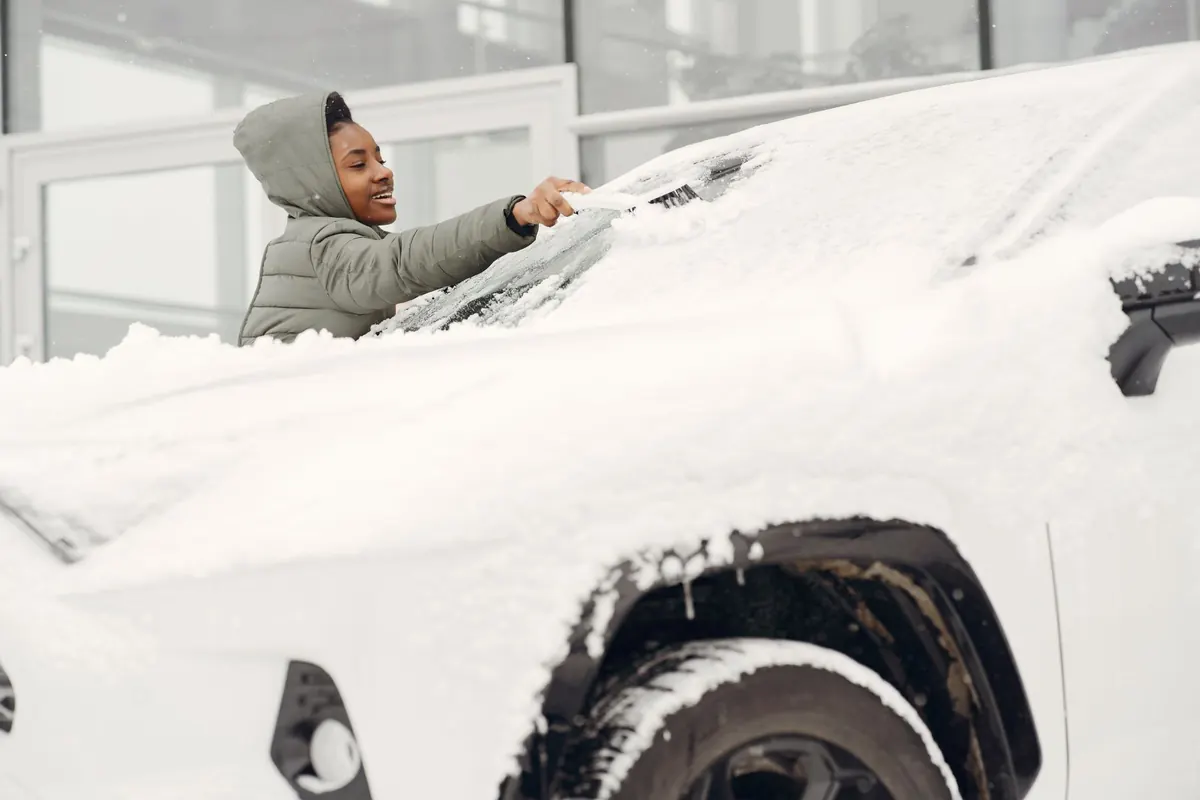
Clear snow from the roof, hood and lights before setting off, not just the windshield. Snow left on the roof can slide forward under braking and blind you, and it becomes a hazard for whoever is behind. Idling for ten minutes warms almost nothing and dilutes oil; driving gently for the first few minutes warms the engine faster and puts less wear on it. Accelerate lightly, brake early and leave a longer gap than you think you need.
Park facing away from where meltwater pools when you can, and in freezing rain consider leaving the parking brake off with the car in gear if the rear brakes tend to stick.
The Payoff
Most of this takes one Saturday and costs more in time than money. A tested battery, proper tires and fluid, working lights and a scraper within reach cover the situations that actually ruin a winter morning. Do the checks now, before the first hard freeze, and you can spend the season enjoying what small cars do best: squeezing through tight streets, warming up fast and making winter driving feel manageable.
Photo: Gustavo Fring / Pexels
Related posts
More stories you’ll love reading